
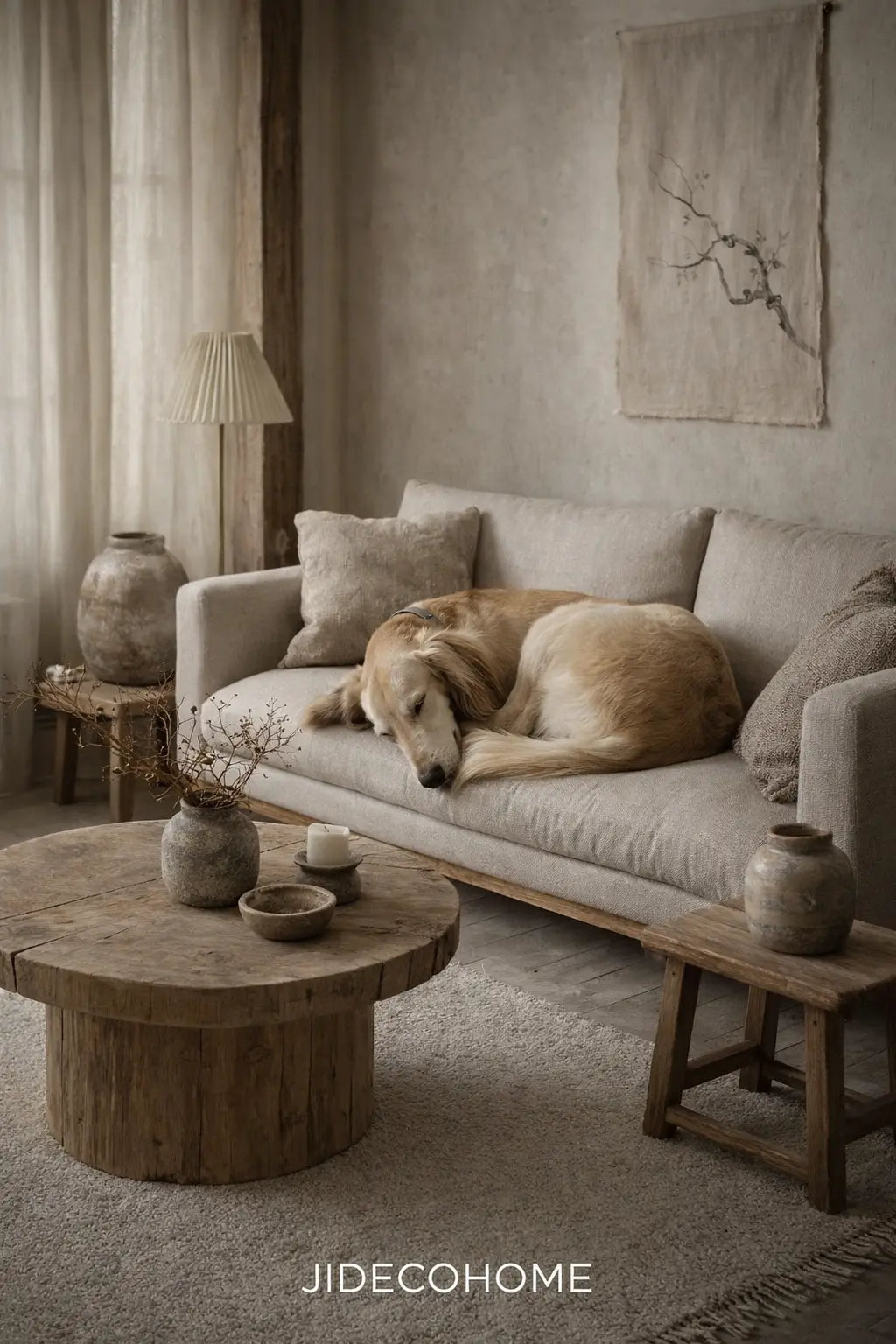
The mistake we all make? Seeking clinical perfection. In our quest for minimalism, we often end up creating cold interiors, almost "empty" of emotion. The secret to breaking this coldness without cluttering the space? Wabi-Sabi.
Unlike classic minimalism, it doesn't seek emptiness, but the soul of objects. We'll give you some tips to correct your approach in 5 steps: decor ideas, material choices, and small tricks to rethink your living room in a Zen style.
But first, what is the wabi-sabi style everyone is talking about? It's the Japanese art of finding beauty in imperfection and simplicity. Applied to your living room, it creates a soothing, natural, and minimalist space, where every object has its place and tells a story. In this article, we offer decor ideas, material choices, and tips for designing a wabi-sabi living room that exudes serenity.

1. Understanding the wabi-sabi style
-
Wabi-sabi values imperfection, authenticity, and simplicity.
-
Spaces are uncluttered, with objects chosen for their history or natural material.
-
The focus is on natural textures, soft colors, and organic shapes.
2. Natural colors and light
-
Favor neutral and earthy tones: beige, sand, light brown, soft gray.
-
Touches of soft green and blue create a soothing atmosphere.
-
Natural light is essential: light curtains, large windows, mirrors to reflect light.
3. Minimalist furniture and accessories
-
Choose simple, organic, and functional furniture.
-
Prioritize raw wood, stone, linen, or natural cotton.
-
Avoid clutter: a few carefully chosen objects rather than many decorations.
Example: a beige linen sofa, a reclaimed wood coffee table, a natural fiber rug.
4. Natural textures and materials
-
Mix wood, stone, ceramic, and natural fabrics to create a warm atmosphere.
-
Material imperfections are an asset: cracks, grains, patina, and irregularities create the charm of wabi-sabi.
5. Plants and natural elements
-
Add green plants for a touch of life and freshness.
-
Dried branches, stones, or handcrafted pottery reinforce the natural and authentic aspect.
-
Avoid overly perfect arrangements: naturalness should feel spontaneous.
6. Tips for a harmonious living room
-
Get rid of the superfluous: less is more.
-
Create a natural focal point, such as a simple work of art or an imposing plant.
-
Use consistent textures and colors for a soothing ensemble.
-
Leave space: emptiness is also part of the decor.

Conclusion
The wabi-sabi style transforms your living room into a space of simplicity, serenity, and authenticity. With natural colors, simple furniture, organic textures, and carefully chosen objects, you can create a living room that exudes balance and well-being. Let your creativity speak and embrace the beauty of imperfection.
www.jidecohome.com
Share:
Decorating ideas for a functional and aesthetically pleasing kitchen
Decorating your home with inspirations from around the world: the creative traveler's guide